


English


ABOUT ORGANIC-LOCK
DESIGN, INSTALLATION & MAINTENANCE
ADDITIONAL RESOURCES
PRODUCT SPECIFICATIONS
PROJECTS
WHERE TO PURCHASE
CONTACT US
DEALER LOGIN
Block Quote


The East Potomac Miniature Golf Course holds a unique place in American recreational history. Opened in 1931, it is the longest continuously operating miniature golf course in North America. Nestled between the Potomac River and Washington Channel, the course is situated on federally owned land maintained by the National Park Service (NPS) and is listed on the National Register of Historic Places.
Despite its cultural significance, the course had seen minimal reinvestment in recent decades with declining play. By the early 2020s, many of its original features had deteriorated.
In 2020, the National Links Trust (NLT), a nonprofit committed to revitalizing municipal golf in the U.S., entered into a 50-year lease with NPS to manage three D.C.-area golf properties. East Potomac Mini Golf became the first renovation project under this partnership, selected not only for its manageable scale, but also for its symbolic potential — a test case in combining historic preservation, sustainable materials, and accessible public recreation.
Moody Graham Landscape Architecture was selected to lead the redesign. The team was tasked with reviving the character of the 1930s-era course while improving function, accessibility, and long-term durability. This case study examines how the design team navigated the complex requirements of historic preservation while addressing contemporary performance standards.
The renovation of East Potomac Mini Golf came with a clear but challenging task: bring new life to a historic course while staying true to its original character. Working within the site’s existing layout and materials, the design team focused on improving usability
Preserving the course’s identity was a non-negotiable mandate from both the National Park Service and the National Links Trust. Because of the site’s listing on the National Register of Historic Places, certain historic features could not be removed or substantially altered.
“THE COURSE HAD TO MAINTAIN ITS ORIGINAL LAYOUT AND HISTORIC ASPECTS LIKE THE MASONRY AROUND ALL OF THE COURSE HOLES. THE OVERARCHING VISION WAS TO BRING THIS COURSE BACK TO ITS GLORY OF THE 1930S.”
— Ryan Moody, Principal, Moody Graham
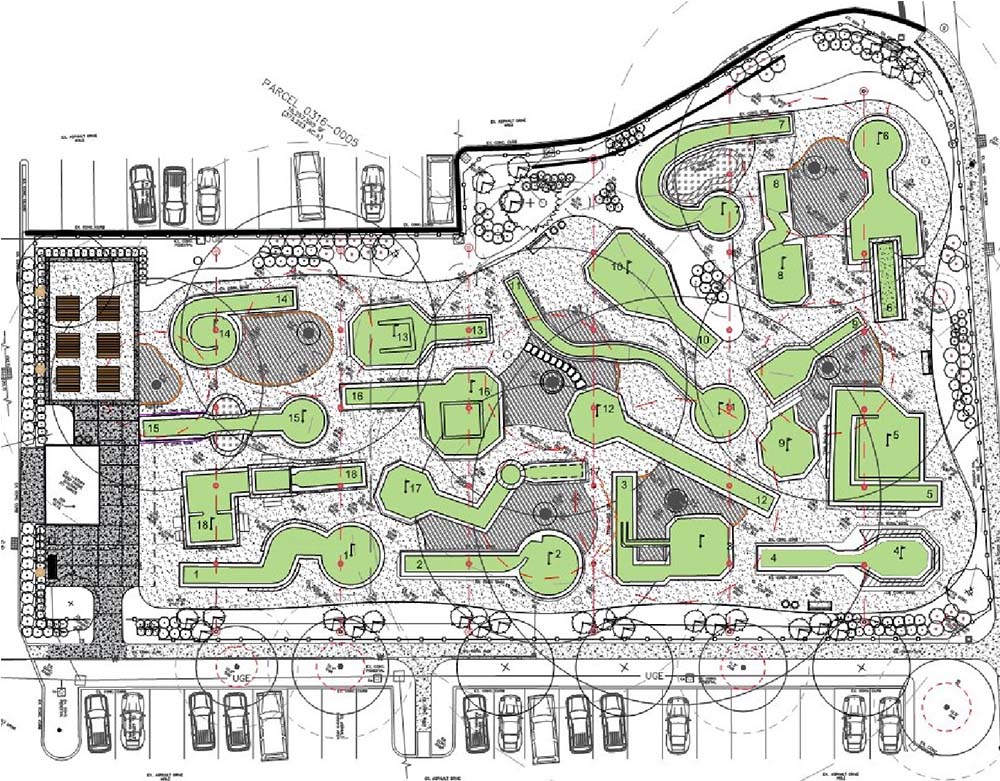
The project operated under strict National Register of Historic Places regulations, requiring the preservation and restoration of the following features.
Over time, the East Potomac Mini Golf Course had become worn and overlooked. While it remained open to the public, aging turf and unclear pedestrian circulation made the experience feel undefined.
“WE FOCUSED ON BRINGING BACK HISTORIC ELEMENTS FROM THE EARLY COURSE DESIGN THAT HAD BEEN LOST OVER THE YEARS. WE ALSO WANTED TO ADD A CONTEMPORARY LAYER OF PLANTING AND STORMWATER MANAGEMENT TO THE DESIGN.”
— Ryan Moody, Principal, Moody Graham
The design team saw an opportunity not only to restore the course’s functionality, but to reimagine it as a welcoming public space. By improving circulation between holes, reviving the adjacent café, and introducing flexible seating, the site was transformed into a place where people could play, gather, and linger — reestablishing its role as a community destination.

Given the site’s flat topography and history of flooding, the design team had to address stormwater concerns within tight grading and preservation constraints. Tree root zones could not be disturbed, the elevation of golf holes was fixed, and site runoff needed to be carefully managed.
“PRIOR TO OUR INVOLVEMENT, MUCH OF THE SITE WOULD HAVE BEEN FLOODED DURING A MAJOR STORM, RENDERING THE MINI GOLF COURSE NONFUNCTIONAL. OUR SOLUTION WAS A COMBINATION OF A LIMITED NUMBER OF AREA DRAINS, MINIMAL GRADING OUTSIDE CRITICAL ROOT ZONES, ADDING PLANTS, AND PERVIOUS SURFACING WHERE POSSIBLE.”
— Ryan Moody, Principal, Moody Graham
Rather than relying on traditional infrastructure alone, the design team approached the site as a living system – one where stormwater could be slowed, absorbed, and filtered through planting and carefully selected materials. The perimeter rain garden and interior planting pockets were key elements in this strategy, capturing runoff from hard surfaces while supporting tree health and biodiversity.
In reimagining the site, Moody Graham envisioned the mini golf course not simply as a play surface, but as a holistic garden experience. The design emphasized tactile and visual variety – transitions between different materials, the interplay of hardscape and softscape, and planting strategies that added depth, character, and ecological value to the space.
“WHEN WE TALK ABOUT THE EXPERIENCE OF GARDENS, WE’RE TALKING ABOUT A LAYERED USER EXPERIENCE. AT THIS SITE, WE HAD AN EXISTING CANOPY TREE LAYER IN GREAT SHAPE, BUT THAT WAS ABOUT IT. ADDING OTHER LAYERS BELOW USING NATIVE PLANTING AND CAREFULLY SELECTED MATERIALS GREATLY ENHANCES USER EXPERIENCE.”
— Ryan Moody, Principal, Moody Graham
A key asset of the site was its mature canopy – healthy, well-established trees that provided a strong upper framework for the landscape. Preserving these trees became a priority early in the design process. Root zone mapping, air spading, and protective construction practices helped avoid disturbance during grading and material installation. The planting design built downward from this canopy layer with native plant species that support biodiversity, stormwater function, and visitor experience.

To recapture the spirit of the course in its heyday – when it remained open late into the night – lighting was reintroduced as a core design element. But traditional pole lighting would have cluttered the visual field and risked damage to sensitive root zones. Instead, Moody Graham collaborated with Olson Weaver to develop a system of catenary lighting that spans the site from discreet perimeter poles. The lighting not only improves safety and accessibility after dark, but also elevates the atmosphere, making the space feel cared for and intentional.

The selection of a surfacing material for East Potomac Mini Golf was driven by a mix of functional and historic preservation requirements.
“WE BEGAN THINKING ABOUT HOW TO CREATE A SURFACE THAT PEOPLE CAN EASILY AND COMFORTABLY WALK ON, IS EASY TO MAINTAIN, AND OFFERS SOME LEVEL OF PERMEABILITY TO IMPROVE SITE STORMWATER MANAGEMENT AND SUPPORT THE HEALTH OF THE EXISTING TREES. AESTHETICALLY, WE WANTED A SURFACING MATERIAL THAT COMPLEMENTED THE EXISTING MASONRY AND THE EXPOSED AGGREGATE CONCRETE. WE LIKED THE FEEL OF GRAVEL — IT FELT LIKE THE RIGHT TEXTURE FOR THE EXPERIENCE ON THE COURSE.”
— Ryan Moody, Principal, Moody Graham
Rigid paving options such as asphalt or concrete were ruled out early in the process for their impermeability and visual incompatibility with the 1930s-era course. Loose gravel presented challenges around migration, maintenance, and accessibility. Stabilized aggregate emerged as the ideal middle ground: a permeable, stable surface that visually echoed the site’s material history while meeting contemporary performance needs.
“WE WANTED THE SURFACE TO BE UNIFORM AND TO BECOME A BACKGROUND ELEMENT SO THE MINI GOLF HOLES WOULD STAND OUT MORE. WE LOOKED AT A NUMBER OF DIFFERENT OPTIONS AND SETTLED ON ORGANIC-LOCK STABILIZED AGGREGATE AFTER HAVING SUCCESSFULLY WORKED WITH STANCILLS TO USE THE MATERIAL ON A PAST PROJECT.”
—Ryan Moody, Principal, Moody Graham
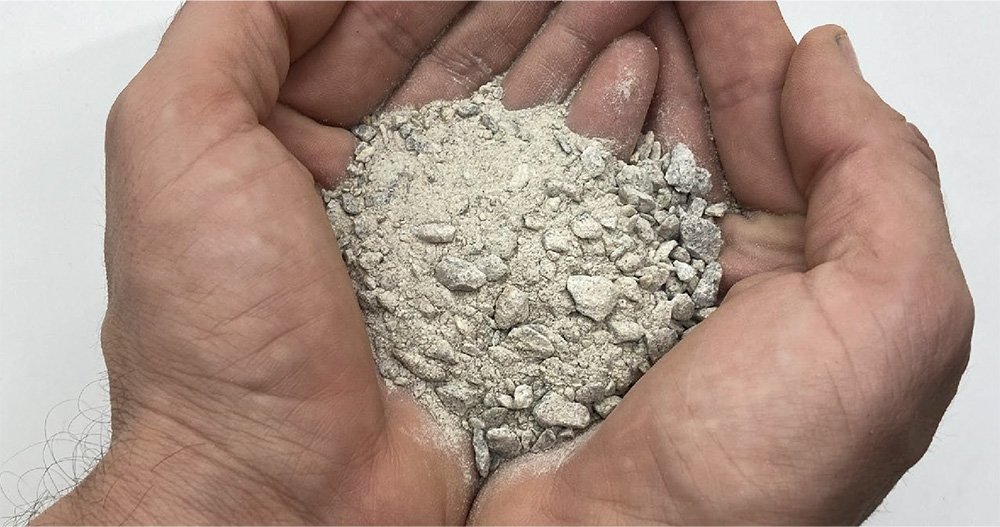
Planning for the installation of Organic-Lock Stabilized Aggregate (OLSA) was a coordinated effort between landscape architect Moody Graham, contractor Black Pearl Management, and technical advisors from Stancills and Organic-Lock. Because the mini golf course is listed on the National Register of Historic Places, the design and construction teams were required to protect and preserve original features, including the exposed aggregate concrete edging and the narrow drainage inlets integrated into the course layout. These preservation requirements imposed tight tolerances to avoid interfering with historic infrastructure while still meeting grading and drainage requirements. Black Pearl, a trusted contractor known to the design team, coordinated OLSA material delivery and managed on-site logistics. Stancills provided on-site technical support and oversight for key steps in the installation process, including:
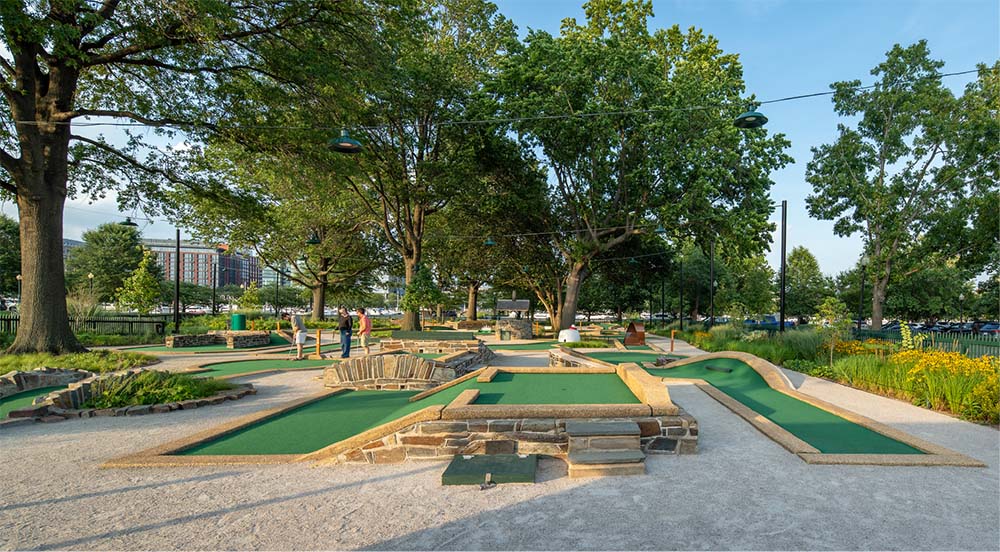
The East Potomac Mini Golf restoration required a careful balance of preservation, technical problem solving, and environmental sensitivity. The site’s historical designation, ecological constraints, and ongoing drainage issues presented a unique set of challenges that shaped the design and construction processes.

Historic Preservation Constraints: The project site is listed on the National Register of Historic Places, which meant original materials and layout elements had to be preserved in place. This limited the team’s ability to alter site layout and grades or replace features with modern equivalents, adding complexity to everything from stormwater design to material selection.

Minimal Site Slope and Drainage Limitations: The flat topography of the site provided little opportunity for gravity-based drainage. Elevation changes had to remain imperceptible to preserve accessibility and protect historic features, which complicated the integration of stormwater infrastructure. The team relied on micro-grading, limited area drains, planting, and permeable surfaces to manage water effectively.

Tree Root Zone Protection: The site’s mature canopy trees were a defining landscape feature — and a key constraint. Subsurface investigation with air spading revealed extensive root networks, which required adjustment to excavation depths and construction techniques. Heavy equipment access was limited, and certain zones were hand-excavated to avoid root damage, requiring additional labor coordination and timeline adjustments.

Extreme Summer Heat During Installation: Construction took place during peak summer months in Washington, D.C., presenting a challenge for the Black Pearl installation team. Moisture levels in the stabilized aggregate had to be carefully managed, and plantings were installed under heat stress conditions. Coordination among the contractor, suppliers, and technical advisors helped mitigate these issues for an ultimately successful install.
The East Potomac Miniature Golf Course has reemerged as a vibrant piece of Washington’s public landscape — a place where local history, thoughtful design, and community life intersect.
“THE COURSE WAS OPERATIONAL, BUT IT WASN’T GETTING A LOT OF ATTENTION OR PLAY. WE HAD A BEAUTIFUL SITE, INCREDIBLY RICH HISTORY, AND MATURE CANOPY TREES TO WORK WITH. GIVEN THESE ASSETS, OUR GOAL FROM THE OUTSET WAS TO PRESERVE AND TELL THE HISTORY OF THIS SITE.”
—Ryan Moody, Principal, Moody Graham
Community response since reopening has been enthusiastic. Families and neighborhood visitors have returned in growing numbers, and the course is once again a venue for birthday parties, casual recreation, and everyday enjoyment.
“ALL THE FEEDBACK WE’VE GOTTEN HAS BEEN EXTREMELY POSITIVE. I’VE TAKEN MY OWN KIDS BACK SEVERAL TIMES, AND IT’S QUICKLY BECOME ONE OF THEIR FAVOURITE PLACES.”
—Ryan Moody, Principal, Moody Graham
With its updated plantings, subtle stormwater infrastructure, and accessible pathways, the revitalized course supports everyday use and long-term resilience. By weaving modern sustainability into a preservation-driven framework, the design reaffirms the site’s civic value — not by reinventing it, but by letting its best qualities shine again.
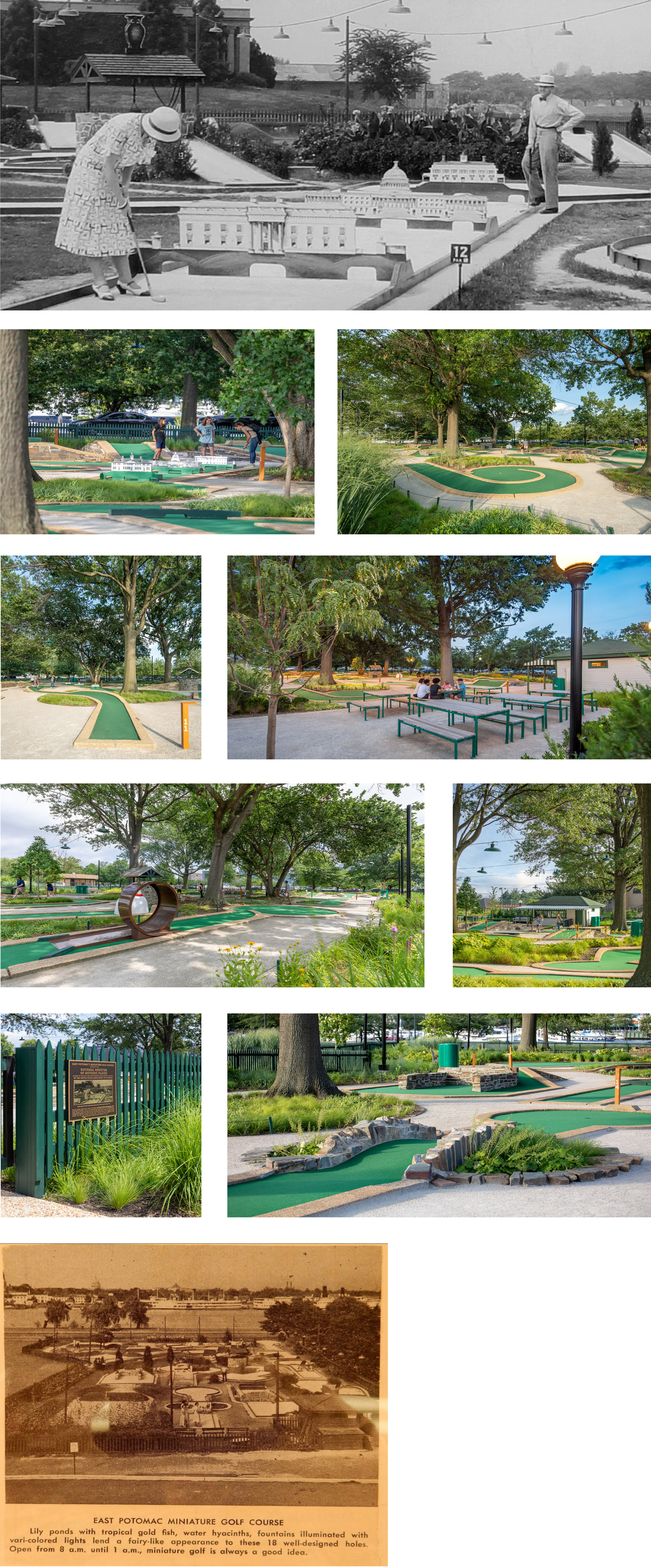
Contributors
Moody Graham Landscape Architecture – www.moodygraham.com
Stancills – https://stancills.com/
Allen Russ Landscape and Architectural Photographer – https://www.allenruss.com
Organic Lock – www.organic-lock.com