


English


ABOUT ORGANIC-LOCK
DESIGN, INSTALLATION & MAINTENANCE
ADDITIONAL RESOURCES
PRODUCT SPECIFICATIONS
PROJECTS
WHERE TO PURCHASE
CONTACT US
DEALER LOGIN
Block Quote


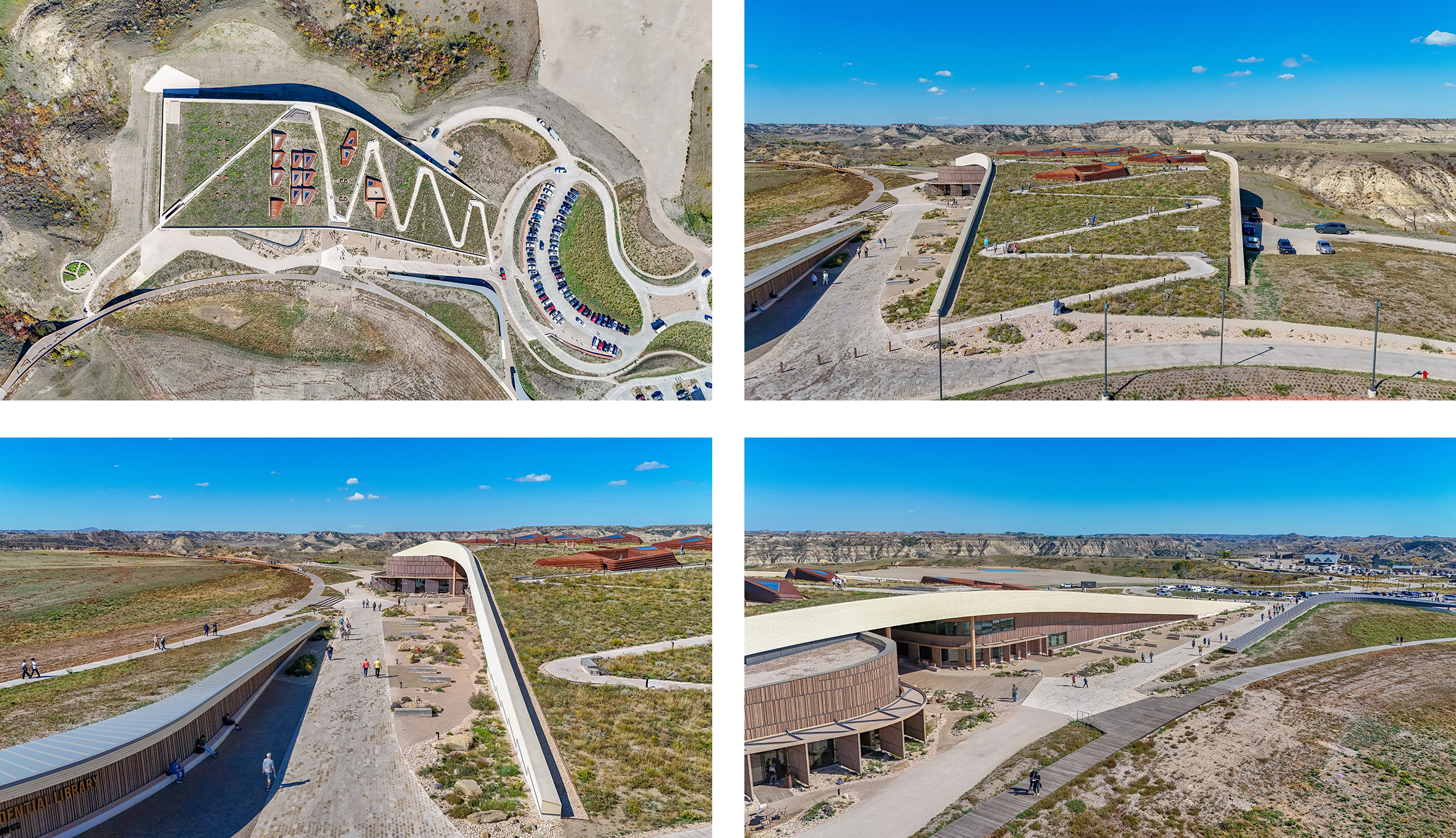
Located on a 93-acre site overlooking Medora, the Theodore Roosevelt Presidential Library brings architecture and landscape together to interpret the conservation legacy of the 26th U.S. president.
The project was designed by Snøhetta, an internationally recognized architecture and landscape design firm known for integrating buildings with their natural surroundings. The design incorporates a living roof, boardwalks, restored prairie and a network of visitor pathways.
Confluence, a landscape architecture and planning firm with regional experience in North Dakota, served as landscape architect of record, while JE Dunn, a national construction firm with extensive experience delivering complex projects, managed construction.
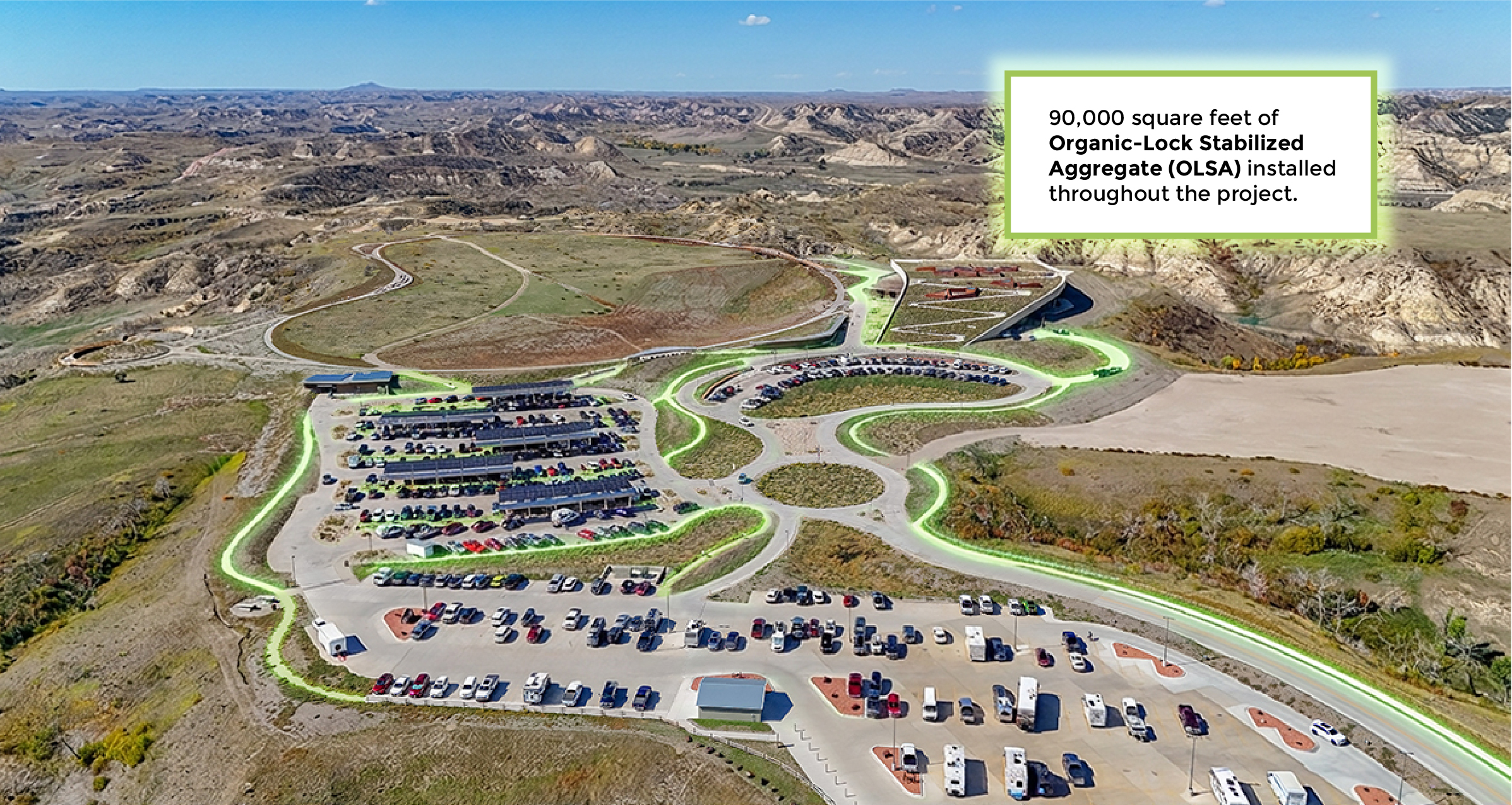
Opened July 4, 2026, the library incorporated approximately 90,000 square feet of Organic-Lock Stabilized Aggregate (OLSA) using regional Brooks Ranch aggregate and locally sourced crushed brick. The project illustrates the challenge of translating an ambitious landscape vision into materials that could be sourced, tested and installed in the North Dakota Badlands.
For the design team, the landscape was not merely the setting for the library. It was away for visitors to encounter the rugged terrain that shaped Roosevelt's appreciation of conservation. Architecture, accessible roof, pathways and boardwalks were conceived as connected experiences rather than isolated features.
For Confluence, translating Snøhetta's vision into construction meant developing landscape assemblies and selecting materials that reinforced the Badlands' rugged character while meeting the demands of a major public destination.
As Brad Aldrich, Principal at Confluence, observed:
“THERE'S SUCH A FOCUS ON LANDSCAPE IN THIS PROJECT THAT MAYBE ISN'T THE CASE IN A LOT OF OTHER PROJECTS.”
Not every visitor would venture onto the surrounding wilderness trails. Some would experience the Badlands primarily through the library grounds, making accessible circulation and opportunities to engage with the natural setting essential to the design.
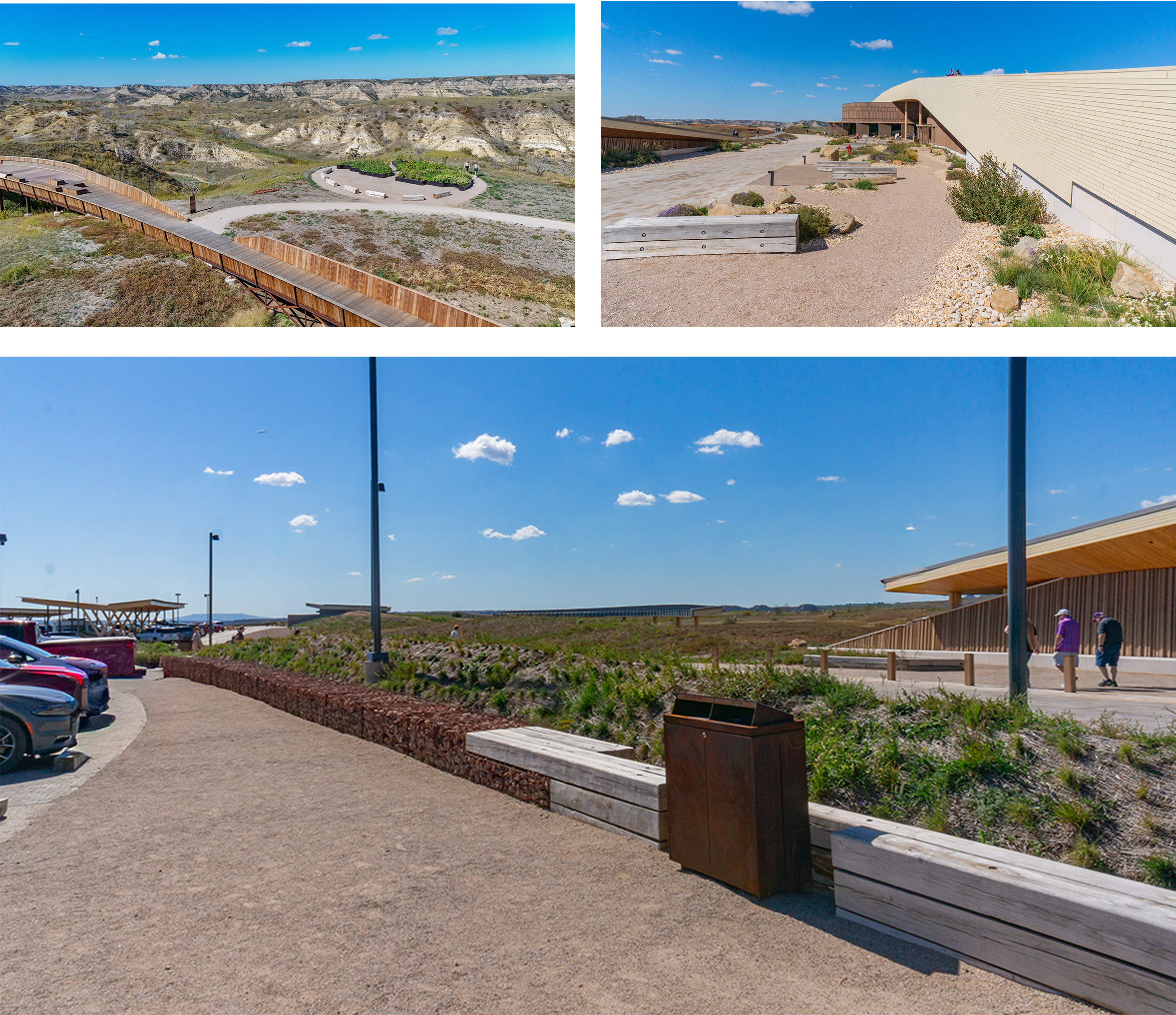
Boardwalks, stone pavers, wood cobbles and aggregate pathways introduced different textures and experiences throughout the site. Aggregate surfacing offered the appearance and feel of a natural trail while requiring careful consideration of stability, accessibility and maintenance.
Aldrich described the intended aggregate character:
“IT WAS A LITTLE CRUNCHY... YOU COULD HEAR IT."
Maintaining this natural character while providing a stable, usable walking surface became an important consideration in evaluating the different pathway materials.
The project's sustainability goals, including pursuit of LEED, SITES and Living Building Challenge standards, placed added importance on material origins and documentation. Combined with Medora's remote location, harsh climate and limited pool of specialized contractors, these requirements made procurement challenging.
Rather than rely entirely on conventional materials brought from farther away, the team explored regional resources, including surplus brick that could be processed into pathway aggregate. The approach connected environmental objectives with the landscape's regional identity, although it introduced additional sourcing and processing requirements.
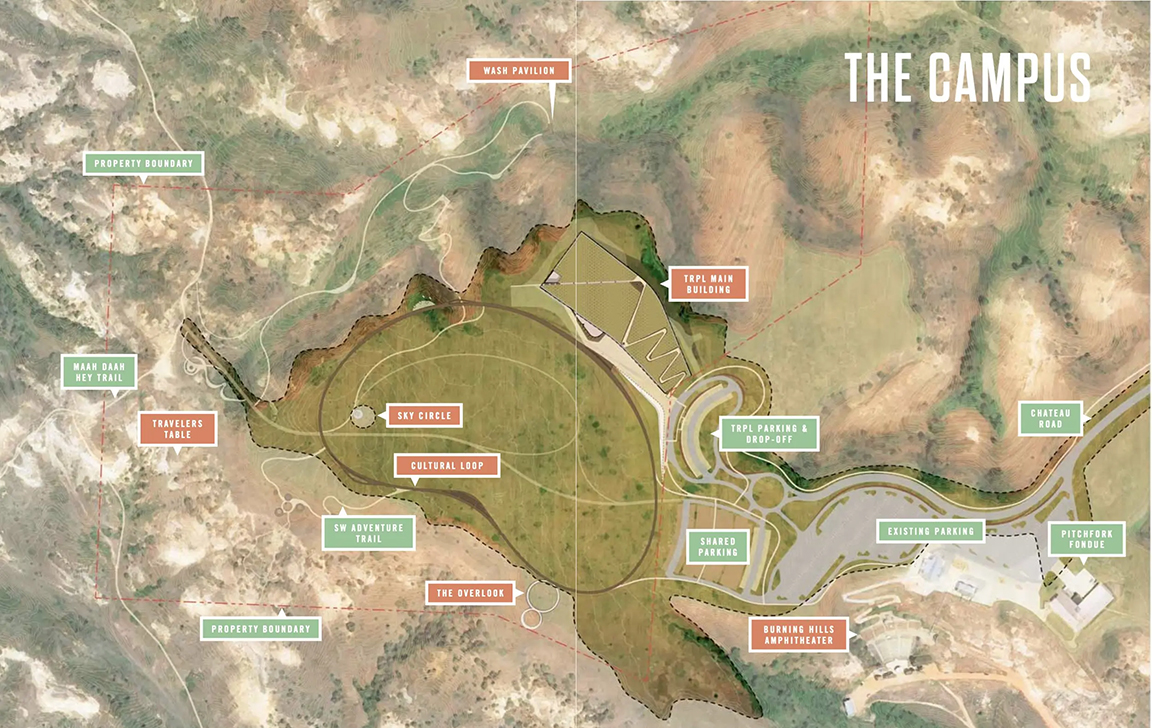
Brooks Ranch aggregate was considered as it reflected the surrounding landscape and was also used in larger sizes for rock gardens and erosion protection, creating continuity across the site.
The team also pursued crushed brick from North Dakota's Hebron Brick, incorporating surplus or damaged material. Turning that by-product into suitable paving aggregate required coordination around available quantities, storage, crushing and binder compatibility.
To evaluate surfacing options under anticipated site conditions, JE Dunn coordinated six adjacent field mock-ups representing different aggregate and binder combinations. Through a thorough research process, 3 different aggregate binders were chosen, and 6 total plots were designed. The plots included unstabilized crushed brick and unstabilized crushed stone, crushed brick with Binder 1, crushed brick with Binder 2, crushed brick with *Organic-Lock, and crushed stone with Organic-Lock.
*Note: Organic-Lock binder is typically available exclusively through its licensed dealer network, as part of a pre-blended, approved stabilized aggregate product. In recognition of the significance of the TRPL project, Organic-Lock made a special exception to its standard distribution model, allowing the project team to incorporate the binder with aggregates specifically selected for the project.
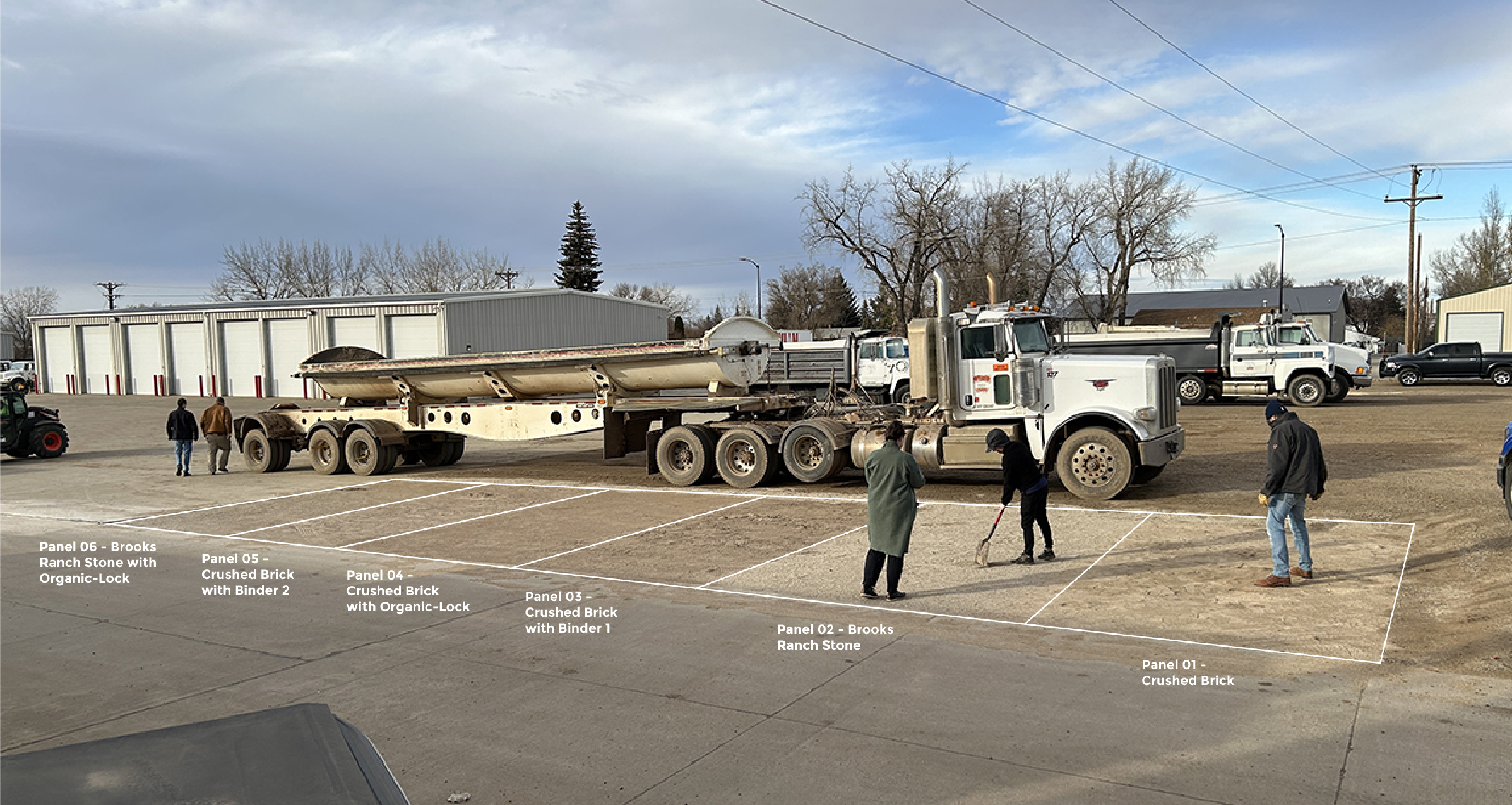
Each mock-up was designed and constructed with input and technical support from the respective binder manufacturer, helping ensure that each stabilized surface was prepared according to its manufacturer's recommendations.
The mock-ups were then subjected to pedestrian traffic, vehicle crossings, tire-turning movements and water exposure. This allowed the project team to assess surface stability, aggregate displacement and drainage response under stresses representative of expected site use.
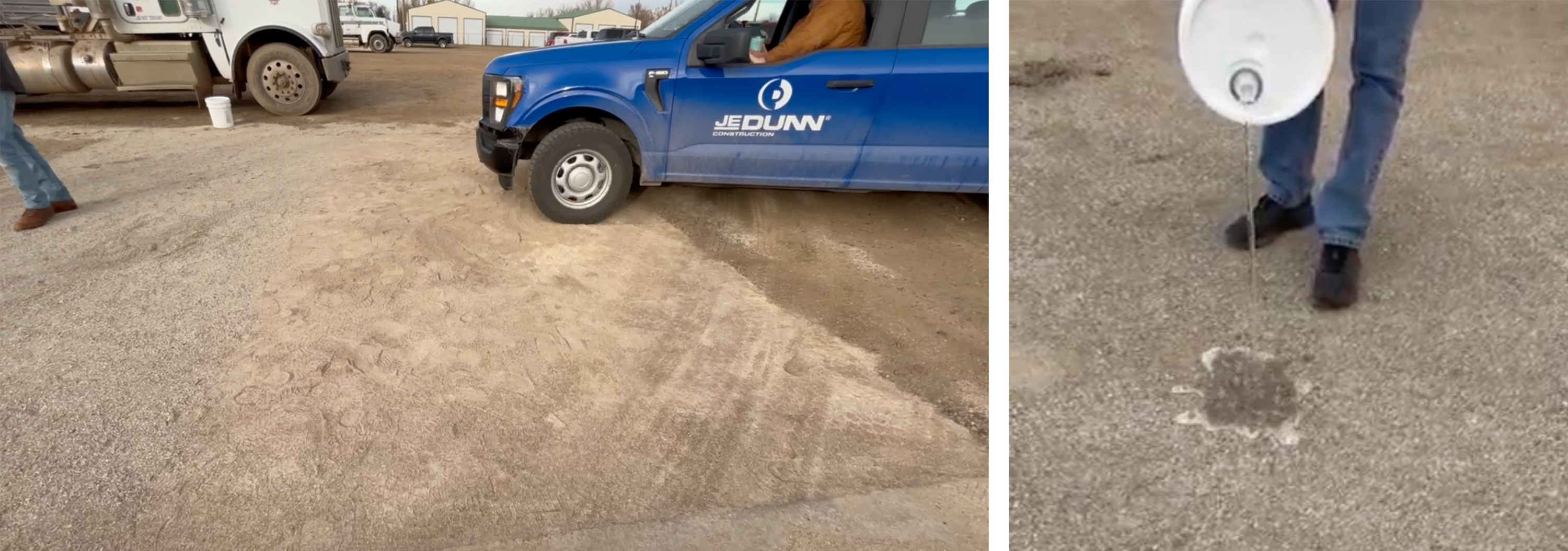
Following the field evaluations, the results were reviewed during a meeting attended by contractors, landscape architects and binder suppliers. The contractors reported that the Organic-Lock Stabilized Aggregate surfaces were the only mock-ups to hold up under the stresses applied, outperforming the other four alternatives.
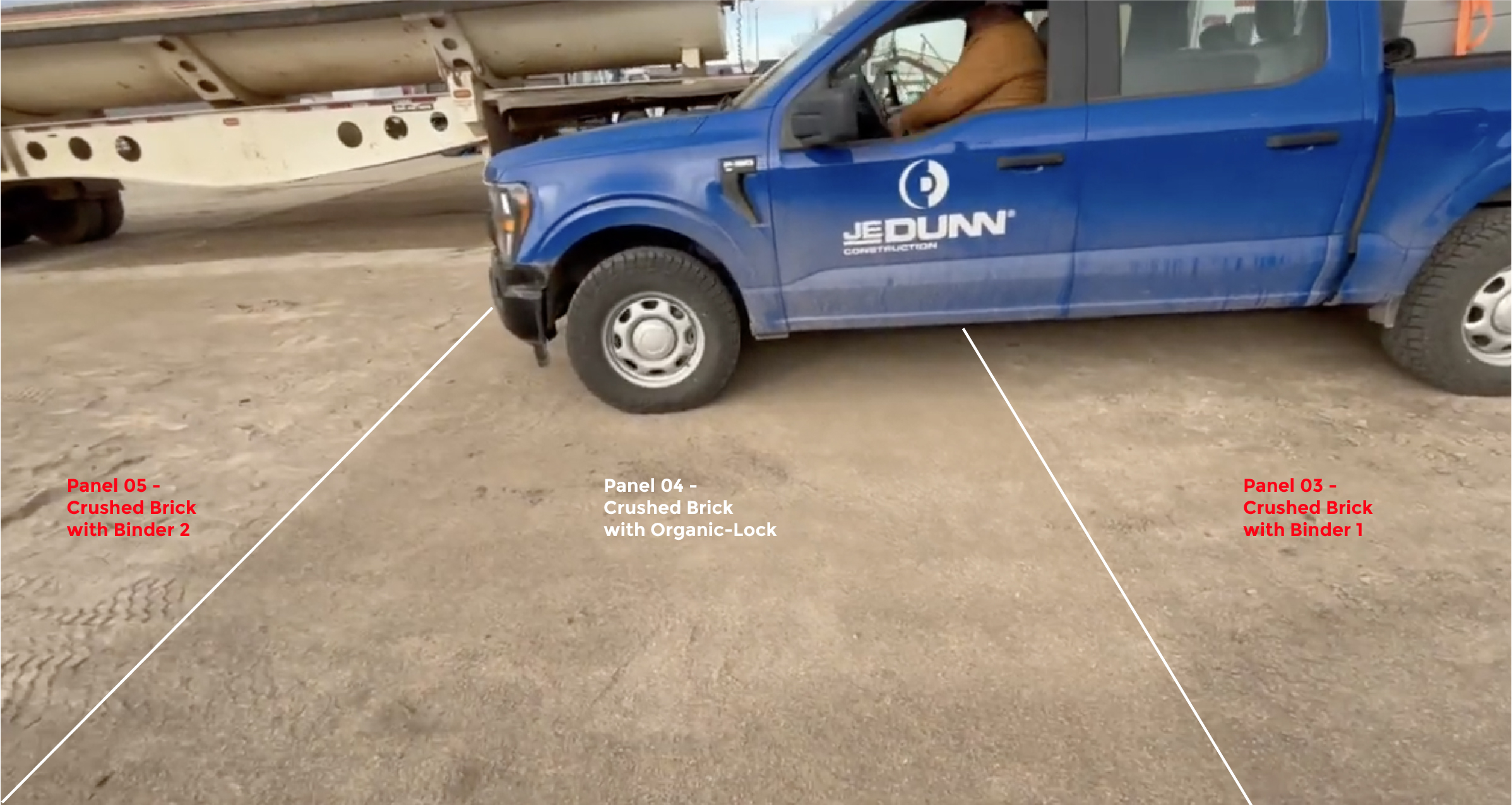
Alongside the field results, Aldrich cited previous experience with Organic-Lock, product availability, technical support and the manufacturer's ability to provide sustainability documentation. These findings played a significant role in the selection of Organic-Lock Stabilized Aggregate (OLSA) for approximately 90,000 square feet of pathway surfacing.
Beyond establishing comparative performance, the mock-up process helped the team identify installation requirements and construction sequencing considerations.
JE Dunn Senior Project Manager Nathan Mandsager emphasized the importance of early planning:
“IT'S A LOT OF FORESIGHT AND COORDINATION TO GET IT DONE RIGHT.”
Mandsager noted that earlier mock-up construction, with the eventual installing contractor involved, would have helped align the test assemblies with the final design.
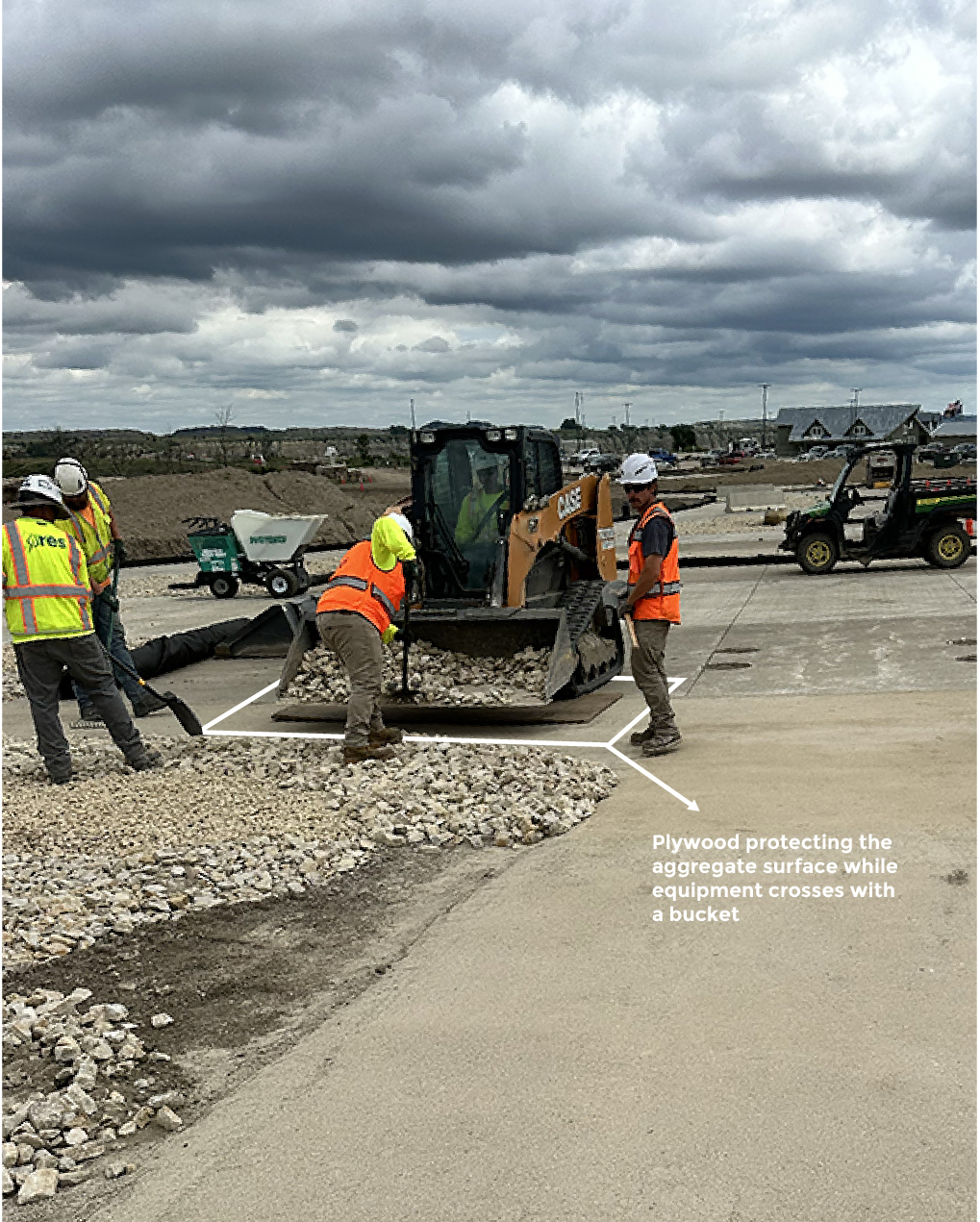
Construction sequencing also required careful coordination. Along the building's east side, completed aggregate pathways overlapped with equipment access, deliveries and material staging. Crews protected necessary crossings with plywood and restricted vehicle movement during wet or thawing conditions to the best of their abilities but still noticed disruptions as a result.
The experience demonstrated the value of scheduling finished aggregate surfaces late in construction wherever practical.
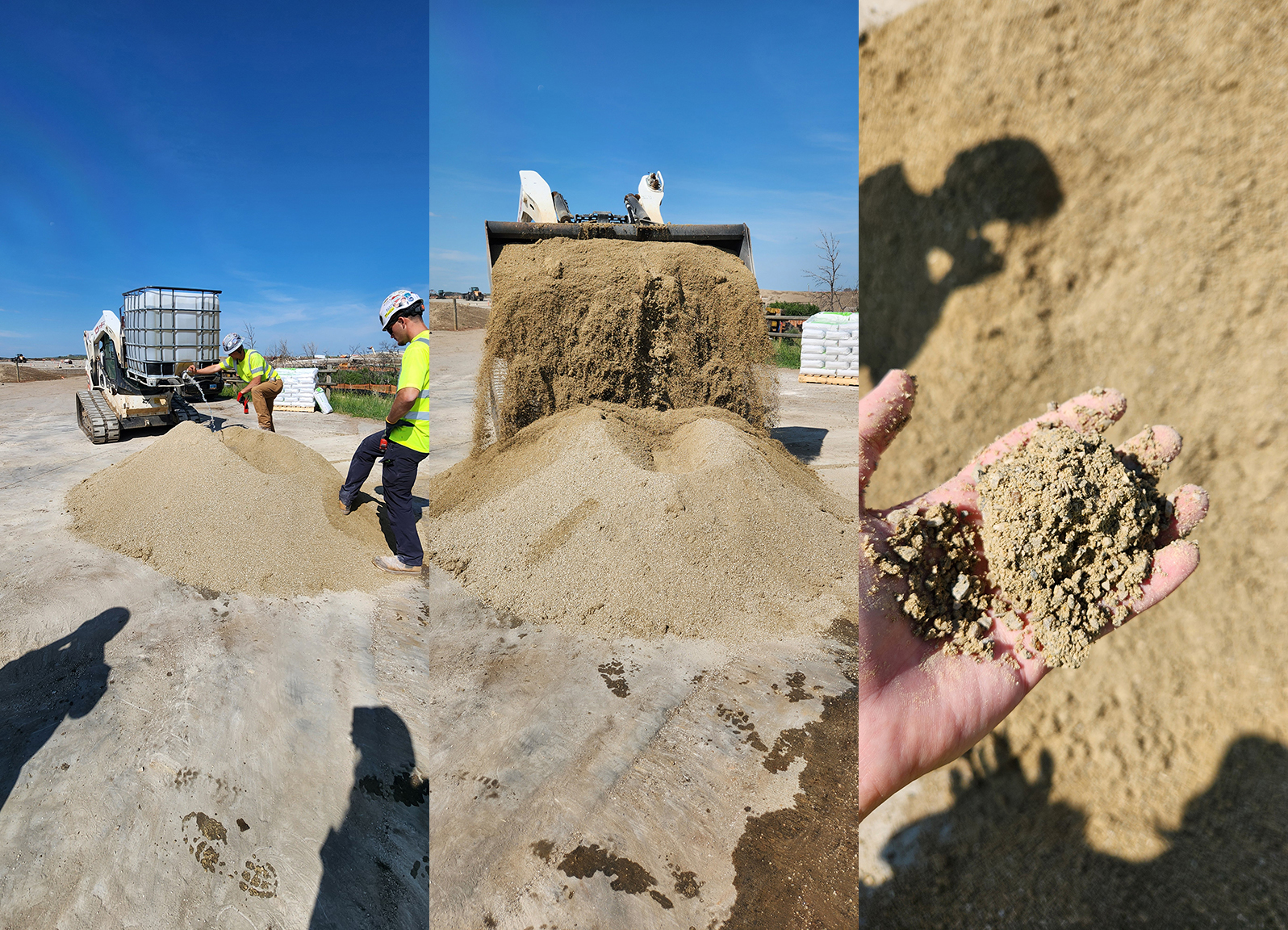
In June 2025, Organic-Lock spent two days onsite working with the installation team to review moisture control, placement and compaction procedures. The aggregate was prepared in five-ton batches, with water added incrementally and moisture levels checked through field "snowball tests" before placement.
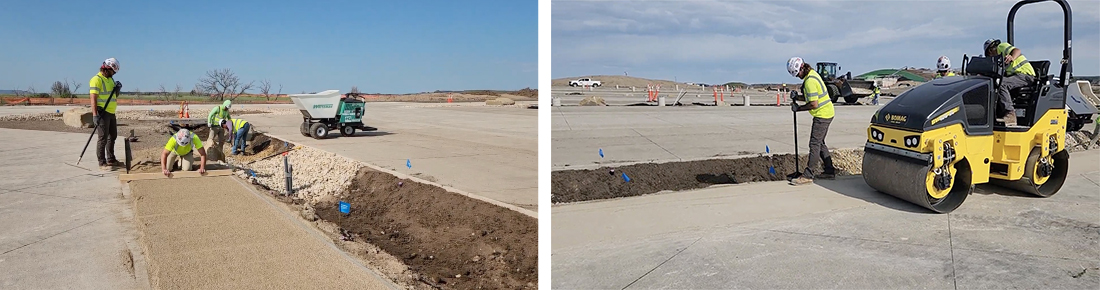
Crews then screeded and compacted the material using a 1 TON static roller, with hand tamping required around boulders, tapered edges and confined landscape areas. Installation progressed in phases, by September, the installing contractor reported installing roughly 100 tons of stabilized aggregate per day, demonstrating the scale of the operation while maintaining the detailed installation requirements of the landscape.
The project presented several challenges that required the team to adapt material selections, construction methods and installation planning.

Regional sourcing: Incorporating surplus brick required coordination around availability, crushing, color blending and binder compatibility. Through material sampling and collaboration with suppliers, the team developed a suitable aggregate blend that supported the project's sustainability and aesthetic objectives.
Using repurposed materials can introduce additional steps that aren't always required with conventional aggregates. Confirming material availability, processing requirements and compatibility early in design can help avoid procurement and scheduling challenges later in construction.

Representative testing: Procuring the installing contractor early enough to construct representative mock-ups proved challenging. JE Dunn coordinated six test panels to inform material selection, highlighting the importance of planning these evaluations earlier in future projects.
One important lesson was the value of involving the eventual installing contractor in the mock-up process. Having the same crew construct the test panels and final pathways would help ensure that the materials, equipment and installation methods evaluated during testing are representative of the finished work.

Drainage and climate: Runoff, erosion and seasonal weather presented challenges where pathways intersected natural drainage features. The team evaluated localized conditions and coordinated paving edges, erosion protection and vegetation establishment, with some areas requiring continued attention.
An important consideration was the timing of vegetation establishment. With natural swales directing runoff throughout the landscape, areas without established planting were more susceptible to erosion. The experience highlighted the value of establishing vegetation earlier, providing additional rock protection at known runoff locations and coordinating with material suppliers before potential drainage issues develop.

Construction sequencing: Finished aggregate surfaces conflicted with ongoing equipment access and material deliveries. Crews addressed this through plywood protection, adjusted access routes and restricting traffic during wet or thawing conditions.
While temporary protection helped accommodate construction activity, the experience reinforced the importance of planning the installation sequence before work begins. Identifying equipment access routes and scheduling finished aggregate surfaces as late as practical can reduce the need for repeated crossings, repairs and rework.
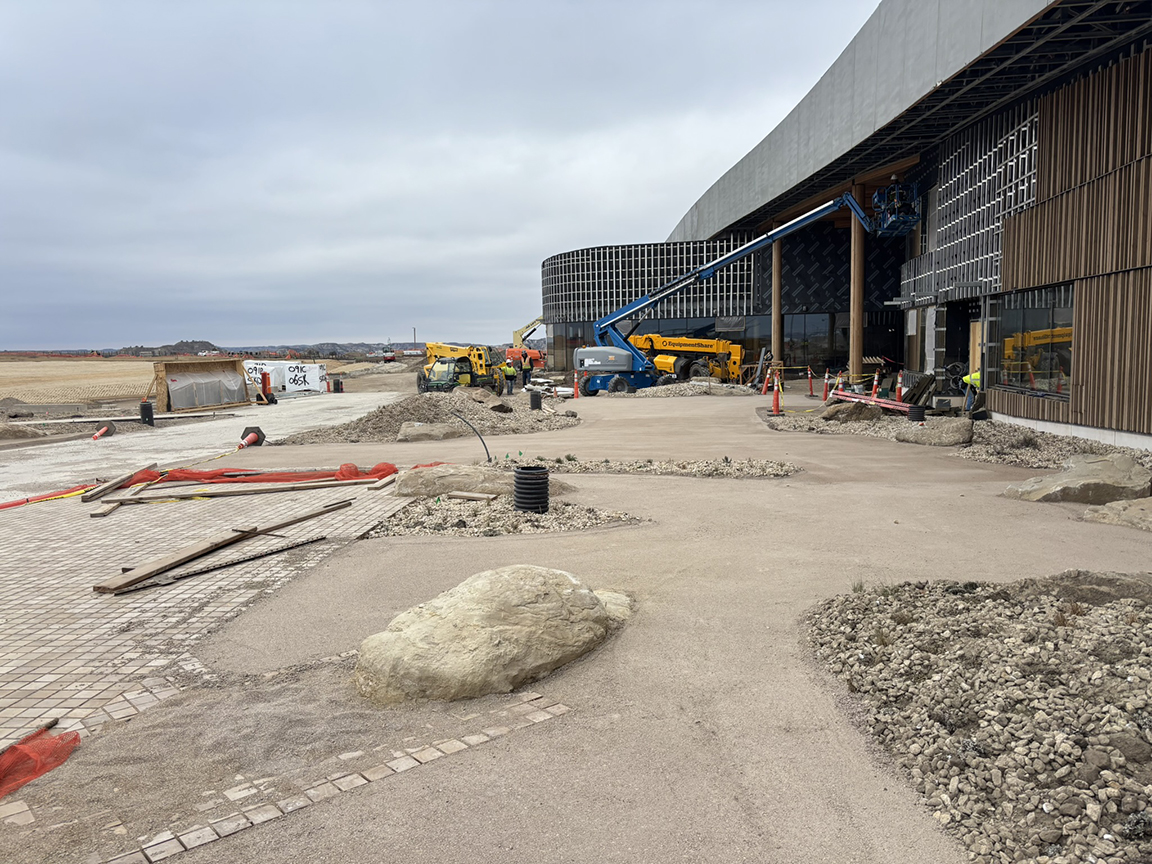
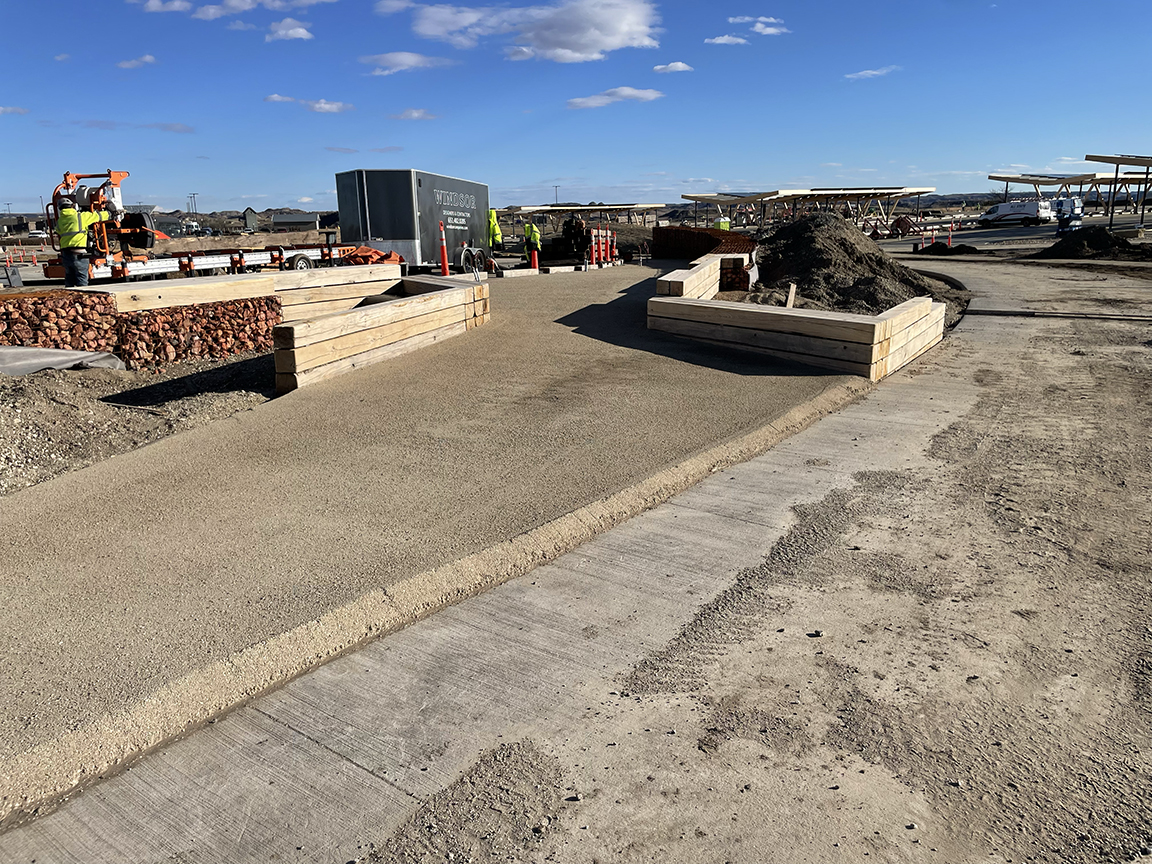
The completed landscape brings the library’s original design vision to life, connecting architecture, accessible pathways, boardwalks and restored prairie with the surrounding North Dakota Badlands.
Through thoughtful material selection, including the use of locally sourced aggregates stabilized with Organic-Lock, the project incorporates regional character while addressing the functional needs of the landscape.
Ultimately, the Theodore Roosevelt Presidential Library demonstrates how ambitious design, environmental considerations and collaboration can come together to create a landscape that reflects Roosevelt's conservation legacy while providing visitors with a meaningful connection to the natural environment.
Confluence – http://thinkconfluence.com/
JE Dunn– https://jedunn.com/
Organic Lock – www.organic-lock.com


